
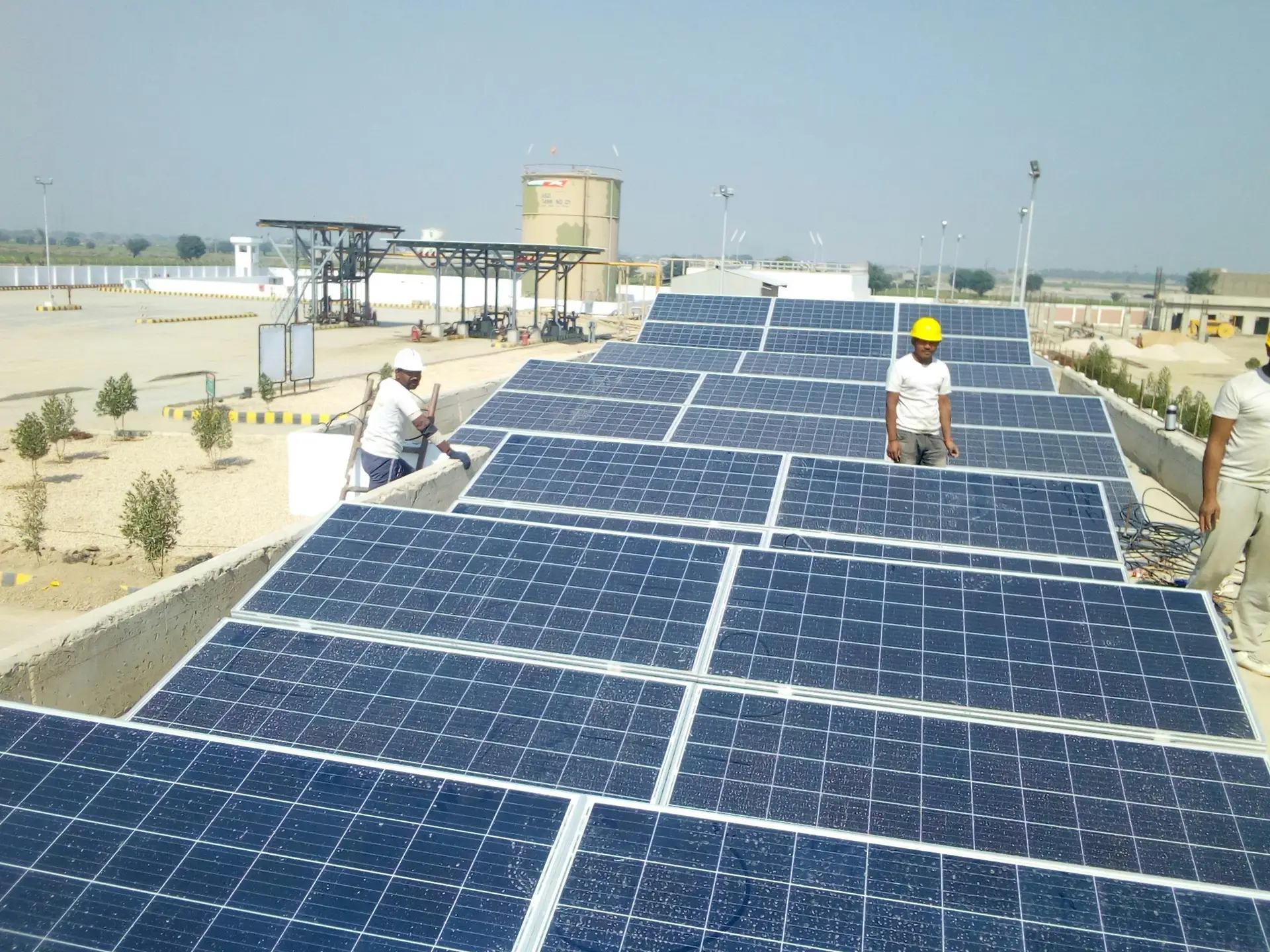

Overview
When a company invests in a solar power plant, it becomes a capital asset. The government encourages this investment by offering accelerated depreciation, which allows businesses to claim higher tax deductions in the initial years of the asset’s life.
In simple words, accelerated depreciation lets businesses recover investment faster, lower taxable income in the early years, and reduce the payback period of a solar project significantly.
What Exactly Is Accelerated Depreciation on Solar?
Accelerated depreciation is a tax benefit that enables companies to depreciate the value of solar equipment at a faster rate compared to normal depreciation.
Instead of spreading depreciation equally over several years, a larger portion can be claimed in the first 1–2 years.
This helps businesses reduce their taxable income and recover capital expenses sooner—something extremely useful when solar installation costs are high.
How Does Accelerated Depreciation Work in India?
Under Section 32 of the Income-tax Act, 1961, solar plants qualify for a higher depreciation percentage under the Written Down Value (WDV) method.
Current guidelines allow:
40% depreciation in the first year
additional 20% in the following year
resulting in 60% total depreciation within 2 years
This is why solar power systems are seen as one of the most tax-beneficial renewable energy investments for commercial and industrial buyers.


How Depreciation Is Calculated for Solar Projects
There are two common depreciation approaches:
✔ WDV (Written Down Value) Method
The most used method in India because it allows faster depreciation.
Depreciation is calculated on the reduced asset value each year.
Formula:
Annual Depreciation = (Opening WDV × Depreciation %)
Example:
If a solar asset costs ₹10,00,000 and depreciation is 40%
Year 1 depreciation = ₹4,00,000
Remaining value = ₹6,00,000
Year 2 depreciation = 40% of ₹6,00,000
✔ Straight Line Method (SLM)
Depreciation remains the same every year.
Example:
₹10,00,000 × 40% = ₹4,00,000 every year
However, Indian tax rules generally favour WDV for solar systems.
What Costs Are Considered for Depreciation?
A solar asset’s cost includes:
solar panels
inverters
installation
mounting material
wiring & electrical components
EPC cost
land development (when applicable)
Any applicable subsidy must be deducted from capital cost before depreciation calculation.
Who Can Claim Accelerated Depreciation?
Accelerated depreciation for solar can be claimed by:
commercial businesses
industrial facilities
private companies
MSMEs
factories
manufacturers
corporate offices
Anyone using solar energy for business operations can claim the benefit.
Major Benefits of Accelerated Depreciation for Solar Users
1. Significant Tax Savings
Depreciation reduces taxable income which directly lowers tax payment.
2. Faster Return on Investment (ROI)
Businesses recover capital expenses much earlier.
3. Better Cash Flow
Savings in tax can be reinvested rapidly.
4. Encourages Renewable Investment
The faster payback promotes long-term energy planning.
5. Lower Cost of Ownership
Depreciation helps reduce financial burden of the solar plant over its lifecycle.
Things to Keep in Mind
While claiming accelerated depreciation:
equipment must be used for commercial purposes
subsidy values must be reduced from project cost
depreciation limits are based on income-tax rules
benefit is higher in early years and reduces later
Why Accelerated Depreciation Matters for Commercial Solar Buyers
Commercial and industrial companies benefit most because they get:
reduced taxable income
quicker payback
higher cost savings
improved business cash flow
better long-term energy security
This makes solar adoption a financially smart decision, not only an environmental on
Conclusion
Accelerated depreciation plays a major role in making solar installations financially attractive in India. With faster tax deductions and early returns, businesses are able to invest confidently in renewable energy while enjoying long-term savings and sustainability benefits.
Share this :
Latest blog & articles

Get Latest Updates and Special Offers
Quick Links

Copyright © 2025 Ushasri Technologies Private Limited. All rights reserved.